
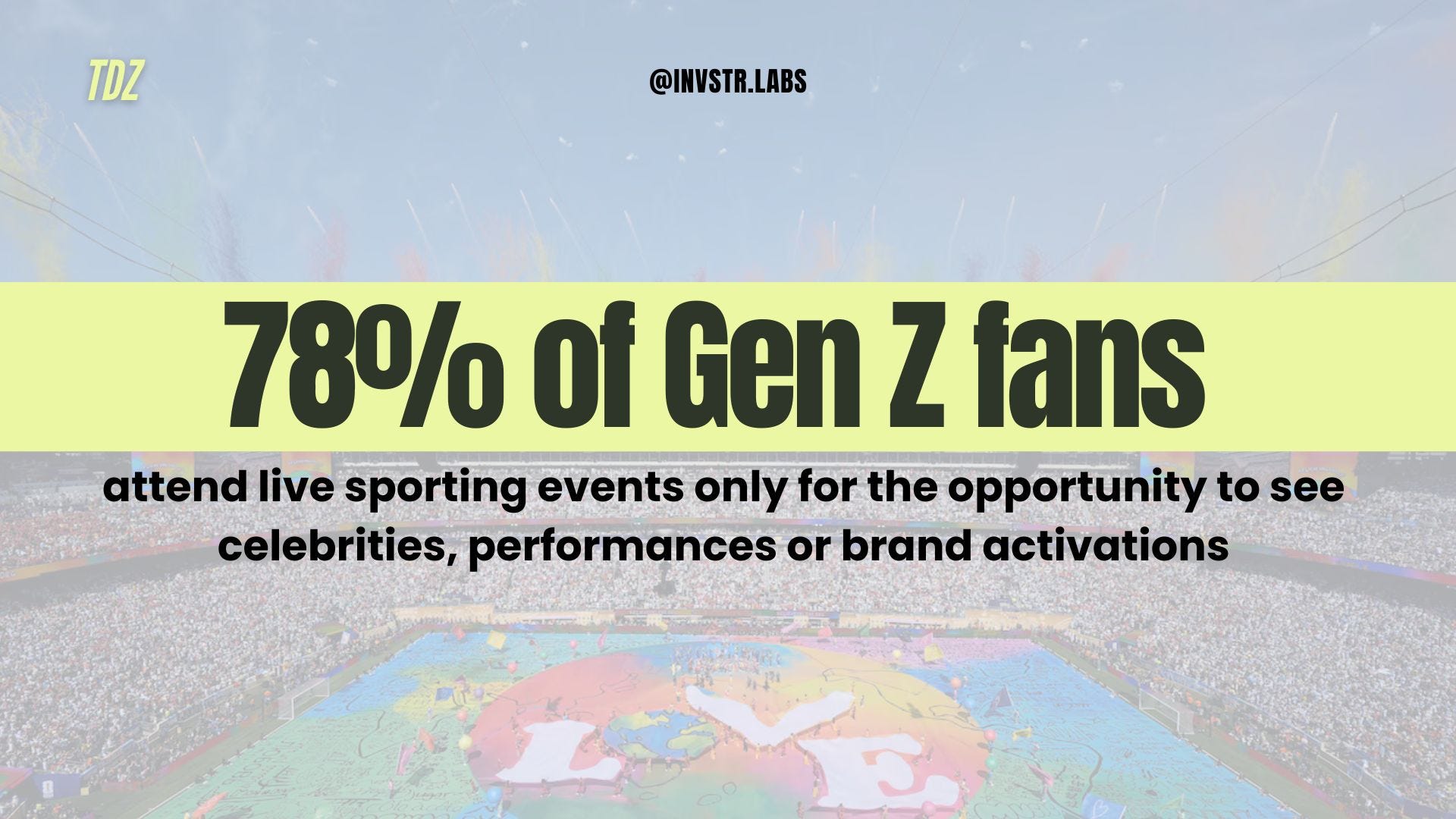
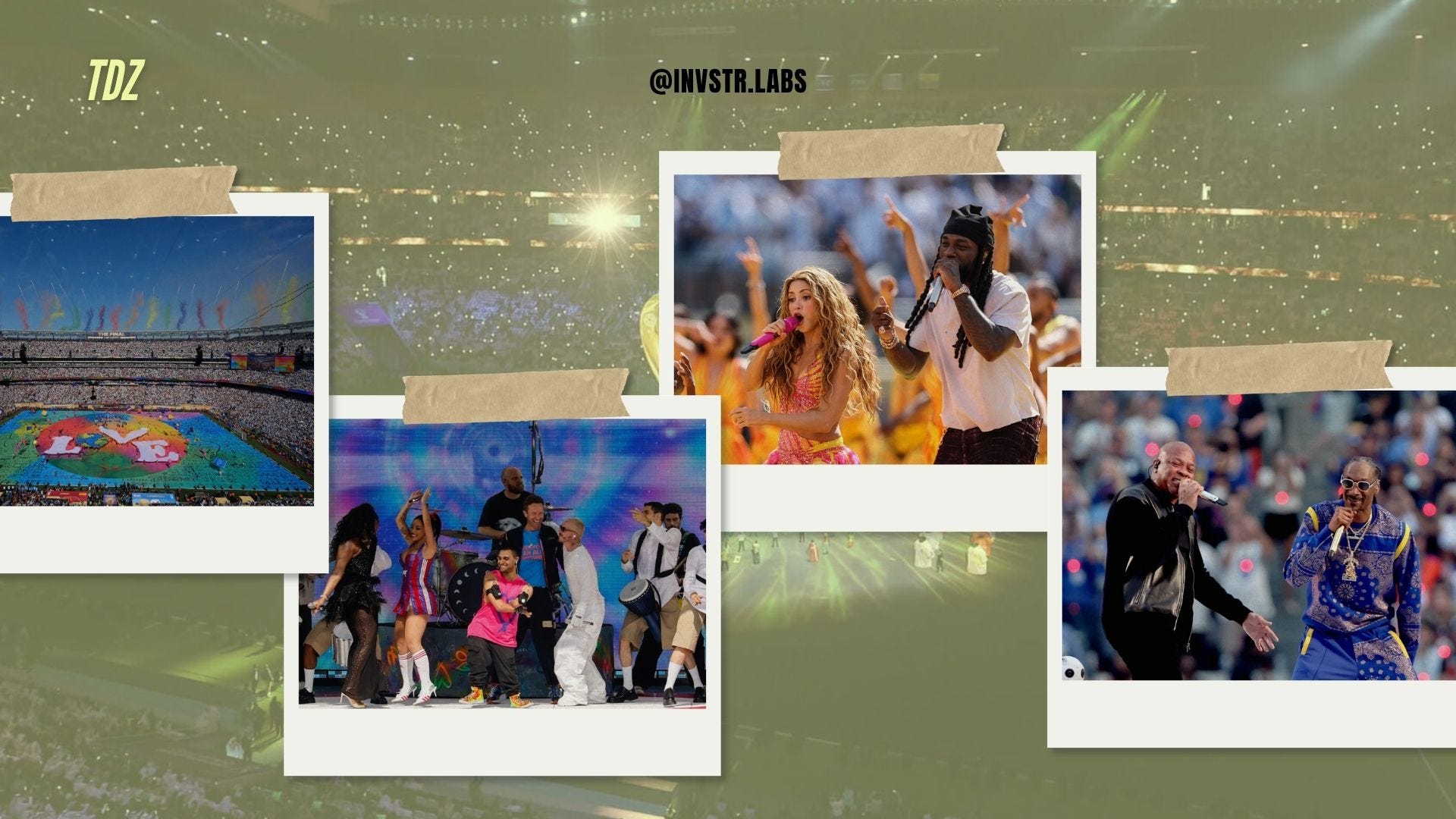
A fundamental shift is happening in sports fandom right now: young viewers are discovering and following sports through pop-culture halftime shows and event activations rather than the sport as a whole. According to a new study by USC Annenberg and the Acceleration Community of Companies, 78% of Gen Z fans attend live sporting events only for the opportunity to see celebrities, performances, or brand activations, rather than to watch the games. Instead of Gen Z fans attending live sporting events like the Super Bowl or the World Cup to watch said sport, they are more interested in everything else, for example, the halftime show that has been a tradition in the Super Bowl for years, or even just the chance to see celebrities in the stands.
Beyond the Scoreboard
Additionally, the new research from ACC and the Annenberg School of Journalism and Communications states that 49% of the younger generation is first introduced to sports through content created by athletes, fans, and/or viral videos. “Young fans aren’t necessarily falling in love with the sport first. They’re falling in love with the athlete, the story, their creator, the controversy, or the community around it. A celebrity relationship or a TikTok video can be just as powerful as the game itself. Sports used to create culture. Increasingly, culture is creating sports fans,” ACC president Monica Chun said in a Tuesday statement. Along with the new research, one can see that young people are no longer tuning in to a three-hour game; they’re engaging with short-form videos, athlete lifestyle content, and viral clips.
For advertisers, this shift represents a goldmine. With nearly 8 in 10 young fans attending for reasons other than the game itself, brands have a prime opportunity to reach Gen Z through interactive pop-ups and experiential activations at sporting events. Gen Z fans seek immersive experiences, which means brands can bridge the gap through interactive activities, strategic activation and entertainment partnerships inside and outside the stadium.
Rooting for the Athlete, Not the Logo
The shift toward lifestyle and storytelling has fundamentally changed who fans root for. Rather than pledging lifelong allegiance to a hometown franchise, younger viewers are directing their loyalty toward individual athletes. According to the study by the Annenberg School of Journalism and Communications along with the ACC, 25% of Gen Z would rather follow an athlete’s individual personal story rather than their games. Additionally, 32% agreed that they find themselves supporting individual athletes over any specific organizations or teams. In previous generations, fans would root for the team jersey, whilst Gen Z root for the human behind the jersey. This indicates that Gen Z fans are more likely to root for the personal brands that influential athletes are building for themselves.
Athletes over teams:
LeBron James: The ultimate blueprint for player over franchise loyalty. Millions of fans have shifted their allegiance from Cleveland, to Miami, back to Cleveland, and then Los Angeles, following the person rather than the team. It remains to be seen if the same will happen with Philadelphia, with his new trade being announced.
Lionel Messi: His move to Inter Miami instantly transferred an international fanbase and massive social following directly to Miami.
Caitlin Clark: Viewers tune in specifically for her personal scoring runs and record-breaking storylines, regardless of which network, court or jersey she is playing for rather than an allegiance to the WNBA franchise.
Lewis Hamilton: In Formula 1, drivers have always had a large personal following but his overlap with music, fashion and activism created a fan base that follows him, regardless of whether he drives for Mercedes or Ferrari.
This shift away from team loyalty has created a new class of sports consumer. Rather than splitting down the middle into die-hard or non-fans, almost half of Gen Z falls into the new “Bandwagon”, where casual viewers only tune into a game when it crosses over into a major cultural event. 26% of Gen Z identify as die-hard fans, with the other 26% considering themselves non-fans, along with 48% of fans who fall somewhere in between, with the surveyors labelling them as the new bandwagon.
Financial Barriers and Backlash
Even when young fans want to experience game day in person, financial reality often gets in the way. Half of Gen Z say lower ticket prices are the most important factor in getting them to attend more live games. Along with that, 31% of Gen Z (including fans and non-sports fans) said they would rather attend a “mega-event” like the World Cup or the 2028 L.A. Olympics than a single championship game or even three regular-season sports games.
Yet as leagues scramble to turn every game into a “show” by introducing random celebrities as cameos, the strategy often backfires. When leagues prioritize forced pop-culture stunts over authentic engagement, especially when fans are already priced out of seats, it elicits instant backlash from both casual and die-hard viewers. For example, FIFA faced significant backlash for pulling out “all the stops” at the World Cup final, but many suggested they were doing too much with celebrities. Fans were all wondering why Tom Cruise was giving a pregame introduction on the field, or why FOX was showing countless celebrities with no obvious connection to either team.
There has been chatter on social media indicating that fans believe the inclusion of random celebrities can ruin big-time sporting events. Some leagues seem to be struggling to find a happy medium between the sport being played and the pop culture that influences the younger fan base to get into sports. Ultimately, Gen Z is not walking away from sports; they are completely redefining what it means to be a fan. For leagues and brands, capturing this generation is no longer about selling traditional team rivalries. It requires access to real individual athletes’ stories, lifestyle crossovers, and brand activations, whilst not losing sight of the sport itself.
Correct. Poses the question: From which perspective do we work with this now?
From a business perspective, one could say that brands need to use this to their advantage and increase investments into personal branding and partnerships with athletes, social media stars, or even major events to ensure an open platform for their brand.
From a SPORTS FAN perspective, it hurts to see and makes you wonder if this trend will continue or if there will be a rebound to make people "real" sports fans anytime soon.
Great article and couldn’t agree more. According to Nielsen data:
4-in-10 Gen Z fans have no favorite club or team — they follow athletes.
6-in-10 engage with sport primarily through athlete content rather than broadcast or club channels.
The landscape is going to change quickly.